
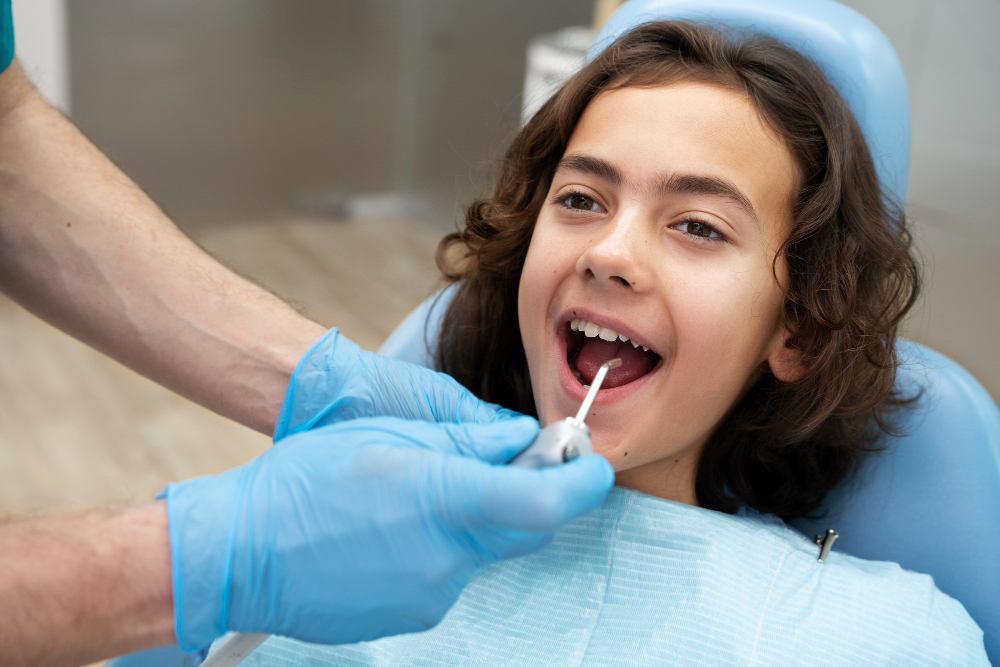
Space maintainers are special dental appliances used in children’s dental care. They help keep the right space in a child’s mouth when a baby tooth is lost too soon. Because early tooth loss can cause problems, space maintainers play a key role in pediatric dentistry. If your child loses a tooth early due to decay, trauma, or other reasons, a dentist may suggest a space maintainer. Understanding when children need space maintainers can help you protect your child’s smile and avoid future dental issues.
What Are Space Maintainers?
Space maintainers are small devices that dentists place in a child’s mouth. Their main job is to hold open the space left by a lost baby tooth. This helps make sure that adult teeth can grow in the right spot. There are different types of space maintainers, and each is chosen based on your child’s needs.
When Are Space Maintainers Needed?
Children may need space maintainers in several situations. Often, they are used when a child loses a baby tooth earlier than expected. This can happen for many reasons, and knowing them can help you act quickly.
In these cases, space maintainers for kids help prevent other teeth from moving into the empty space. According to the American Dental Association (ADA), this is important for healthy dental development.
How Do Space Maintainers Work?
Space maintainers work by holding the gap left by a missing tooth. Because teeth can shift over time, the device keeps other teeth from moving into the space. This way, when the adult tooth is ready to come in, there is enough room for it to grow straight. Usually, the space maintainer stays in place until the new tooth starts to appear.
Benefits of Space Maintainers
There are many advantages to using space maintainers in children’s dental care. Not only do they help with proper tooth alignment, but they also prevent future dental problems.
Because space maintainers protect your child’s smile, they are a smart choice after early tooth loss.
What to Expect During Placement
Getting a space maintainer is a simple process. First, the dentist will check your child’s mouth and take an impression. Next, the dental appliance is made to fit your child’s teeth. During the placement visit, the dentist will attach the device. Most children feel little to no pain. The whole process is quick, and your child can return to normal activities soon after.
Care and Maintenance Tips
Proper care is important for space maintainers. With the right steps, you can help your child keep their dental appliance clean and working well.
Because good care prevents problems, always follow your dentist’s advice.
Potential Risks or Complications
While space maintainers are safe, there can be some risks. Sometimes, the device may become loose or break. In rare cases, it can cause gum irritation or trap food. However, regular dental visits help catch these issues early. If you notice any problems, contact your dentist right away.
Prevention and Oral Hygiene
Although space maintainers are helpful, preventing early tooth loss is best. Good oral hygiene can lower the risk of decay and trauma.
Because healthy habits protect your child’s teeth, start them early and keep them strong.
For more information, visit trusted sources like the American Dental Association or the Centers for Disease Control and Prevention (CDC).
Consult your dentist for personalized advice on space maintainers for your child.